theprofitera@gmail.com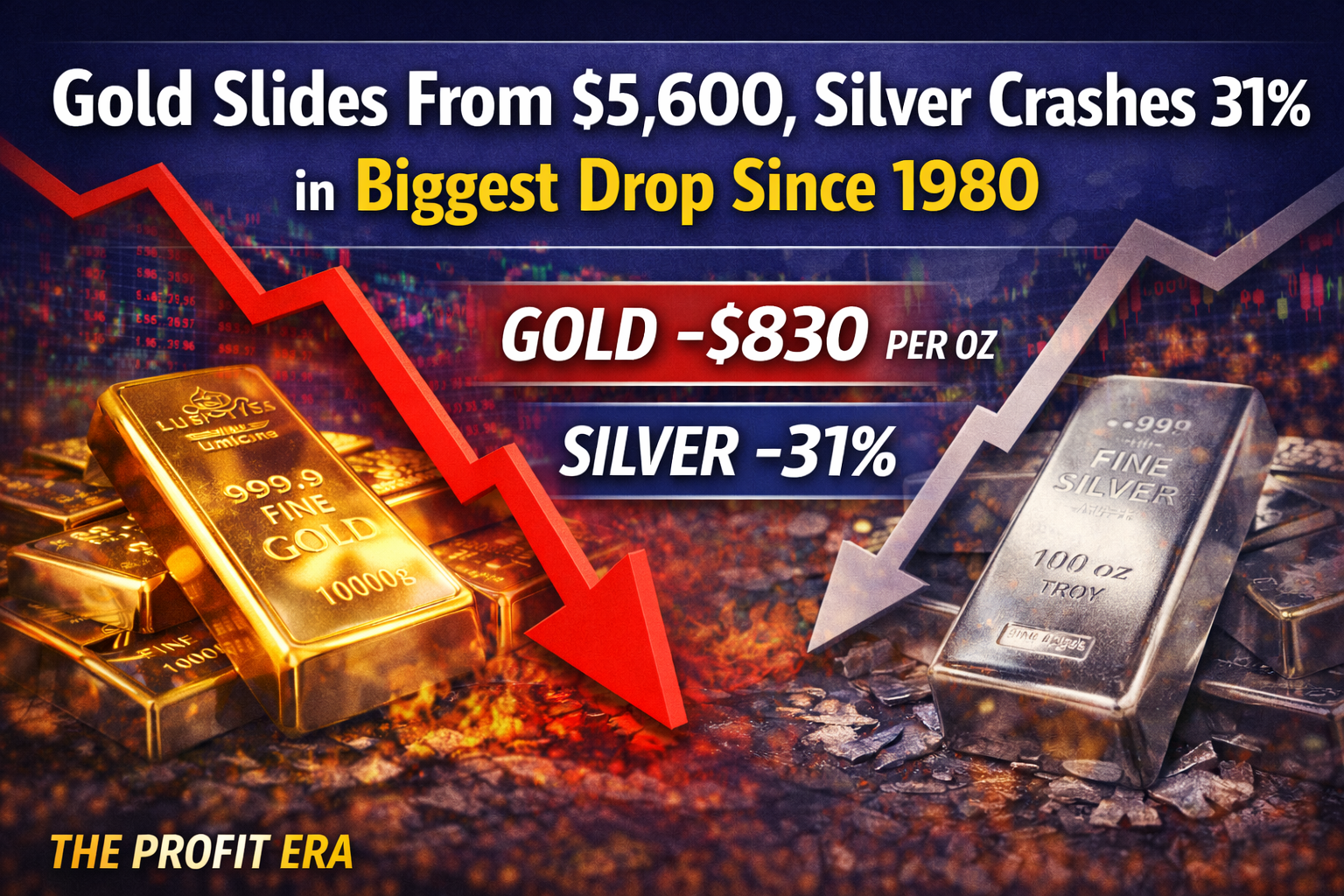
Precious metals witnessed a sharp and surprising correction after a strong rally, with gold prices falling from a record high of $5,600 to around $4,770 per ounce, while silver plunged nearly 31% in a single session on Friday—marking its largest percentage decline since March 1980.
The sudden sell-off has raised concerns among investors and traders, prompting questions about what triggered such steep declines in traditionally safe-haven assets.
1. Profit-Taking After an Extraordinary Rally
One of the primary reasons behind the sharp fall was heavy profit-booking. Both gold and silver had rallied aggressively over recent months, driven by geopolitical tensions, central bank buying, and expectations of interest-rate cuts.
When prices reached extreme levels, large institutional investors and traders began locking in profits. In thin or volatile market conditions, such selling can quickly snowball into a sharp correction.
2. Stronger U.S. Dollar and Rising Bond Yields
A strengthening U.S. dollar played a significant role in pressuring precious metals. Since gold and silver are priced in dollars, a stronger greenback makes them more expensive for holders of other currencies, reducing demand.
At the same time, rising U.S. Treasury yields increased the opportunity cost of holding non-yielding assets like gold and silver, encouraging investors to shift funds toward interest-bearing instruments.
3. Forced Liquidation and Margin Calls
Silver’s steep 31% crash suggests the presence of forced selling and margin calls, especially in leveraged positions. As prices began to fall, traders using borrowed funds were compelled to exit positions, accelerating the decline.
Historically, silver is more volatile than gold due to lower liquidity and a higher proportion of speculative trading, making it more vulnerable during sharp market corrections.
4. Easing Geopolitical Risk Premium
Precious metals had benefited from elevated geopolitical risks and global uncertainty. As some of these concerns eased or failed to escalate further, the risk premium built into gold and silver prices began to unwind, triggering selling pressure.
Markets tend to price in worst-case scenarios quickly—and just as quickly remove that premium when risks stabilize.
5. Algorithmic and Technical Selling
Once key technical support levels were broken, automated trading systems and momentum-based strategies likely amplified the sell-off. Algorithmic selling can cause rapid price declines, especially during periods of heightened volatility.
Silver’s historic drop mirrors past episodes—such as the 1980 crash—when technical breakdowns led to cascading losses.
6. Shift in Investor Sentiment Toward Risk Assets
Improving sentiment in equity markets and selective risk assets reduced the appeal of safe havens. As investors rotated capital into stocks, bonds, or alternative assets, demand for precious metals weakened in the short term.
Outlook: Correction or Trend Reversal?
Despite the sharp fall, analysts caution against interpreting the move as the end of the precious metals bull market. Central bank buying, inflation risks, and long-term geopolitical uncertainties continue to provide structural support for gold.
However, the recent episode highlights that even safe-haven assets are not immune to sharp corrections when positioning becomes crowded and markets turn risk-sensitive.
Conclusion
The dramatic fall in gold and silver prices was driven by a combination of profit-taking, macroeconomic pressures, forced liquidation, and technical selling. While the declines were severe, they may represent a necessary correction after an overheated rally rather than a complete shift in long-term fundamentals.
Investors are advised to remain cautious, manage leverage carefully, and closely monitor global macro signals as volatility in precious metals is likely to persist.