theprofitera@gmail.com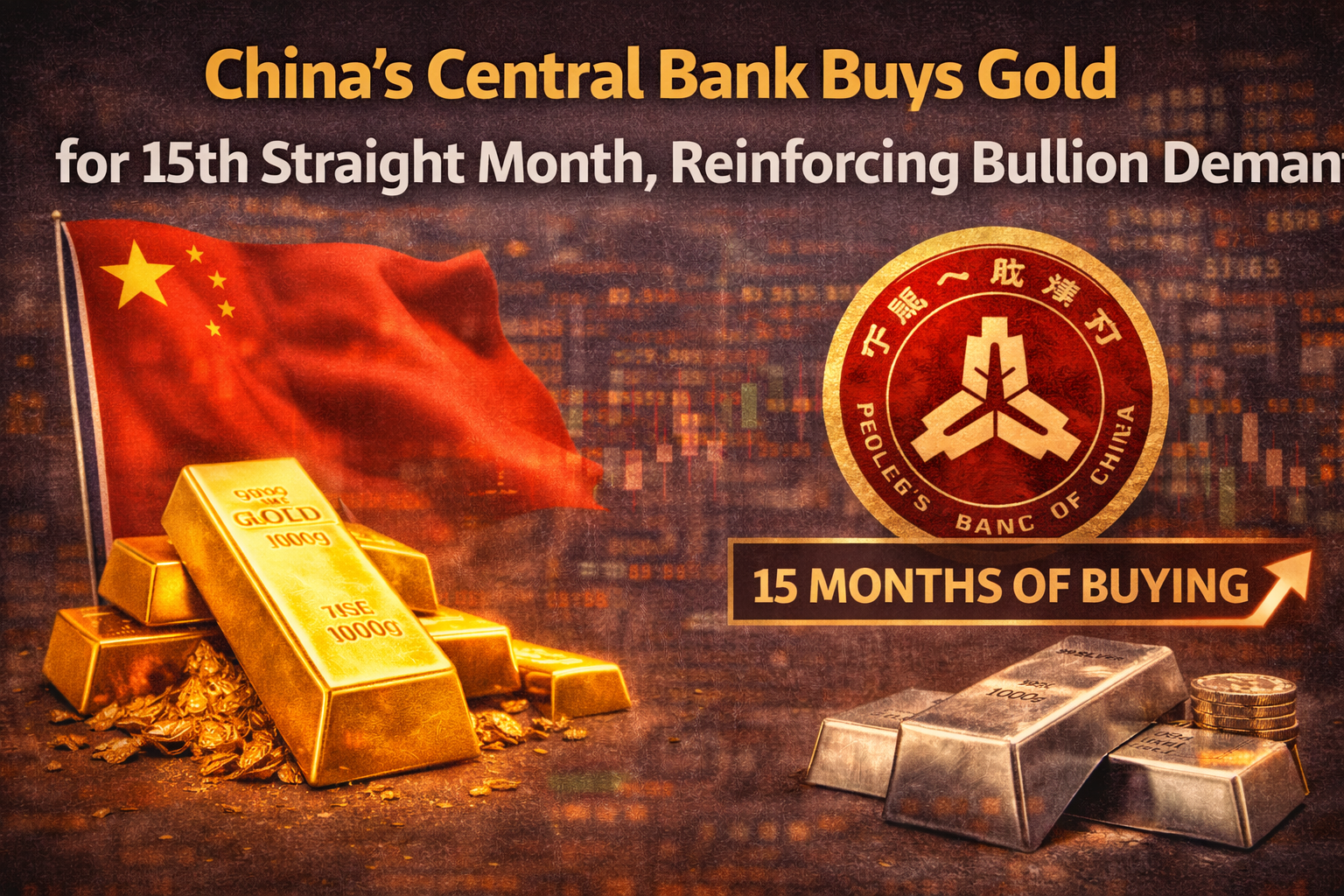
Persistent Gold Accumulation Continues
China’s central bank has added gold to its reserves for the 15th consecutive month, underscoring Beijing’s long-term strategy to diversify foreign exchange holdings and reduce reliance on traditional reserve currencies. The continued purchases highlight strong official-sector confidence in gold amid growing global economic and geopolitical uncertainty.
According to official data, the People’s Bank of China (PBoC) has steadily increased its gold reserves as part of a broader shift toward hard assets.
Why China Is Buying More Gold
Several key factors are driving China’s sustained gold accumulation:
- Reserve diversification: Gold helps reduce exposure to the U.S. dollar and other fiat currencies.
- Geopolitical risk management: Rising global tensions have reinforced gold’s role as a strategic hedge.
- Currency stability: Gold holdings support confidence in China’s financial system during periods of market stress.
- Long-term wealth preservation: Gold remains a trusted store of value during inflationary cycles.
Analysts note that China’s actions mirror a broader trend among emerging-market central banks increasing their gold reserves.
Impact on Global Gold Markets
China’s continued buying has provided a strong structural floor for gold prices, supporting the metal even during periods of short-term market corrections. Central-bank demand has become one of the most important drivers of the recent multi-year rally in gold.
Market experts say sustained official-sector purchases limit downside risk and reinforce gold’s long-term bullish narrative.
Part of a Global Trend
China is not alone. Several central banks across Asia, the Middle East, and Eastern Europe have increased gold reserves as nations seek financial resilience in an increasingly fragmented global system.
This coordinated buying has reshaped the gold market, shifting influence away from speculative trading toward long-term institutional demand.
What Comes Next
Investors will be watching future central-bank reserve data closely. Continued accumulation by China and other major buyers could keep gold prices supported even if financial markets turn volatile or interest rates remain elevated.
Final Take
China’s 15-month streak of gold purchases signals strong confidence in bullion as a strategic asset. For global investors, it reinforces gold’s role as a long-term hedge against economic uncertainty, currency risk, and geopolitical stress.