theprofitera@gmail.com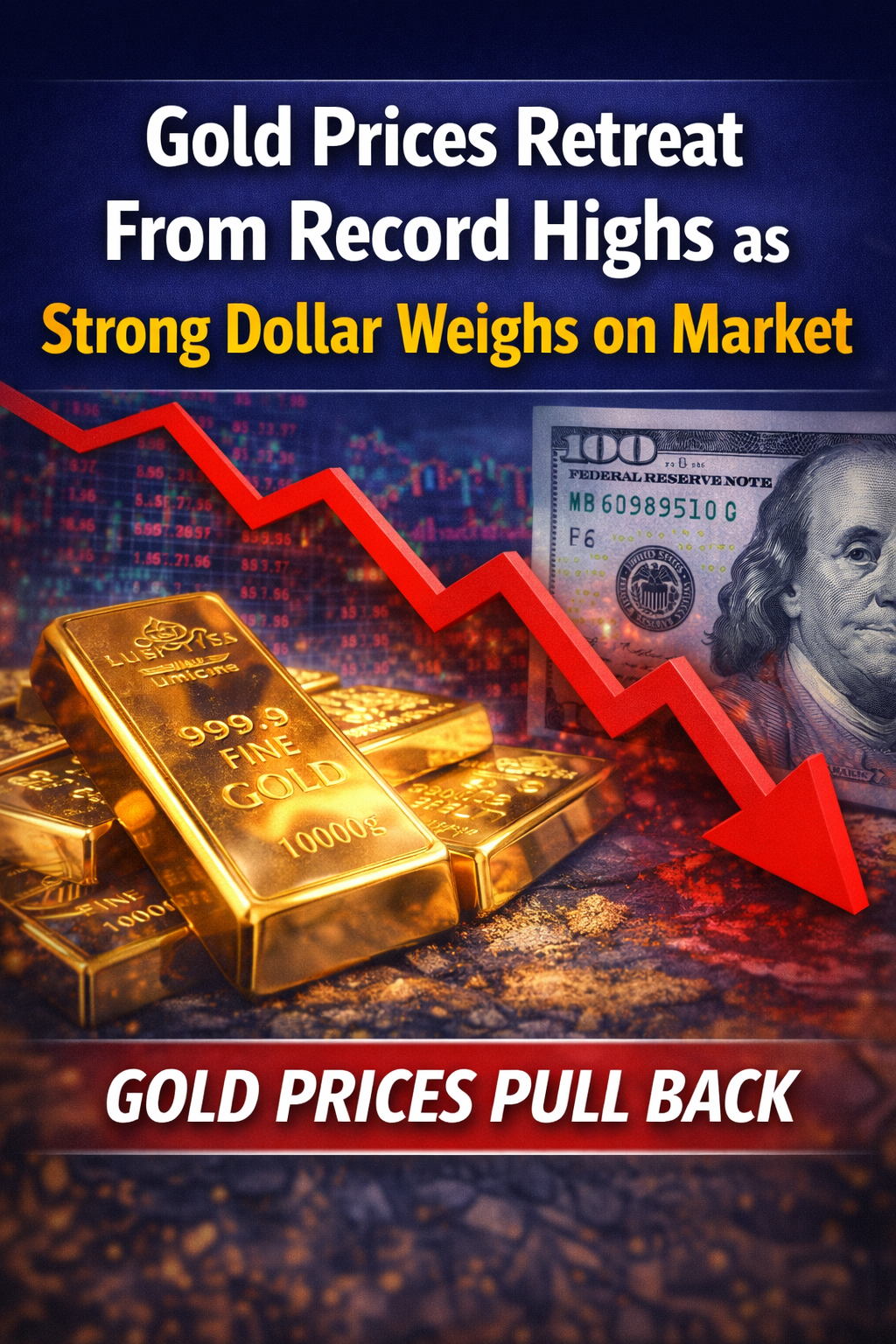
Gold prices eased from record highs as a stronger U.S. dollar and rising bond yields prompted investors to book profits, reducing demand for the safe-haven metal after a strong rally.
Spot gold slipped in global markets, while domestic gold prices also edged lower, reflecting pressure from currency movements and changing expectations around global interest-rate policy. The pullback comes after gold touched historic highs driven by geopolitical tensions, central bank buying, and speculation over future rate cuts.
Strong Dollar Pressures Gold
The U.S. dollar firmed against major currencies, making gold more expensive for holders of other currencies and limiting fresh buying interest. Historically, a stronger dollar tends to weigh on gold prices, as the metal is priced in dollars and offers no yield.
Rising U.S. Treasury yields further reduced gold’s appeal by increasing the opportunity cost of holding non-interest-bearing assets.
Profit-Taking After Sharp Rally
Analysts say the recent decline is largely due to profit-booking after gold’s strong upward move. Investors who entered positions at lower levels opted to lock in gains as prices approached record territory.
Despite the short-term pullback, market participants continue to view gold as a strategic hedge against inflation, geopolitical risks, and financial market volatility.
Central Banks and Long-Term Support
Central bank purchases remain a key pillar supporting gold prices over the long term. Several emerging-market central banks have continued to add gold to their reserves, aiming to diversify away from the U.S. dollar.
Additionally, uncertainty around the timing and pace of global interest-rate cuts continues to influence gold market sentiment.
Outlook
Experts expect gold prices to remain volatile in the near term, closely tracking movements in the U.S. dollar, bond yields, and economic data. Any signs of easing monetary policy or renewed geopolitical tensions could revive upside momentum.
While short-term corrections are possible, the note adds that gold’s long-term fundamentals remain intact.