theprofitera@gmail.com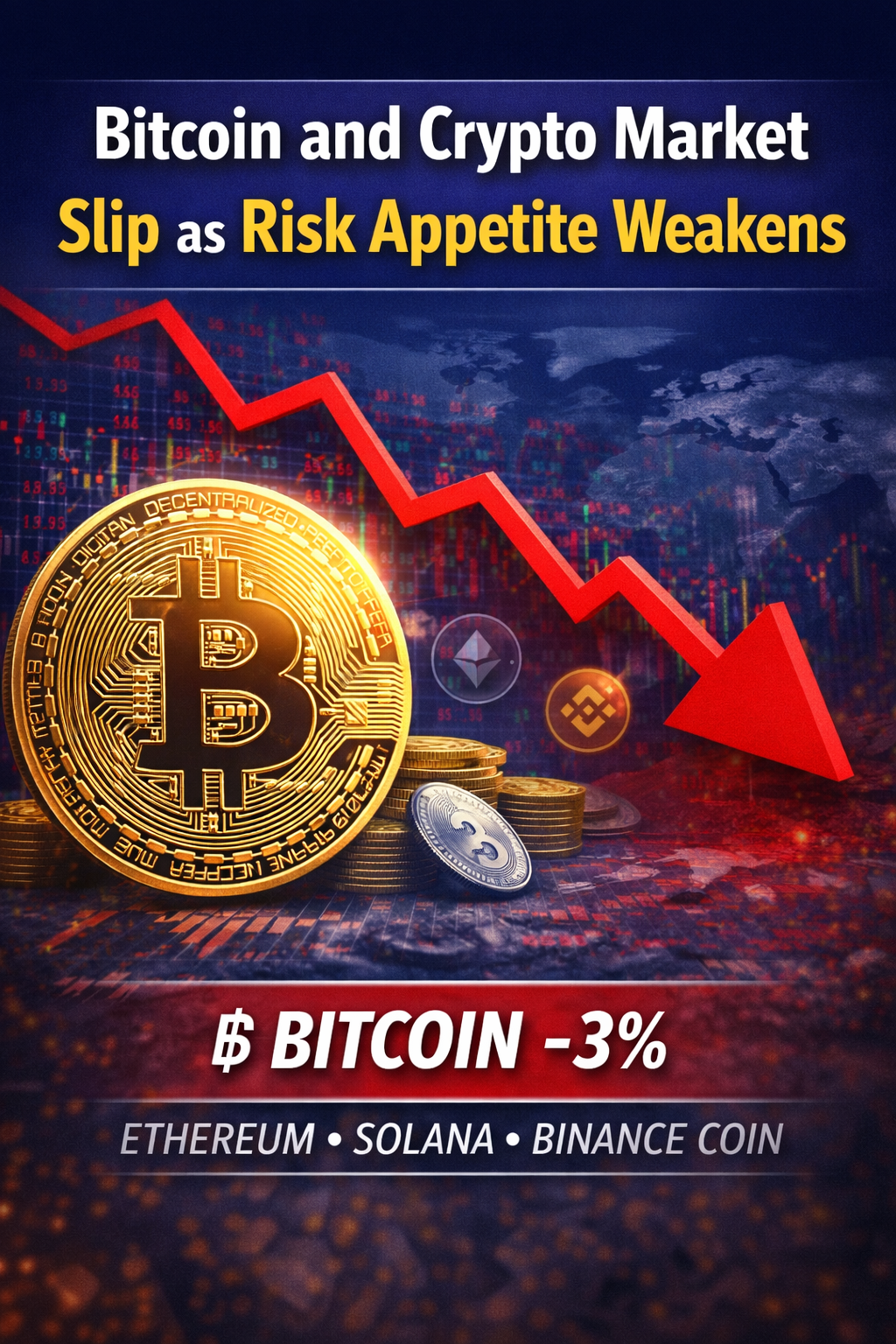
The cryptocurrency market traded lower as risk appetite weakened across global financial markets, prompting investors to scale back exposure to high-volatility assets such as Bitcoin and altcoins.
Bitcoin slipped from recent highs, while major cryptocurrencies including Ethereum, Solana, and Binance Coin also posted losses. The broader crypto market saw increased selling pressure as traders reacted to macroeconomic uncertainty and shifting expectations around global monetary policy.
What’s Driving the Crypto Decline?
The pullback in digital assets comes amid a combination of rising bond yields, a stronger U.S. dollar, and caution ahead of key economic data and central bank guidance. These factors tend to reduce demand for risk-on assets, including cryptocurrencies.
Additionally, profit-taking emerged after recent rallies, particularly in Bitcoin, which had gained on optimism surrounding institutional adoption and ETF inflows. As momentum slowed, short-term traders moved to lock in gains.
Altcoins Under Pressure
Altcoins underperformed Bitcoin during the sell-off, a common pattern during periods of risk aversion. Ethereum faced selling pressure as investors remained cautious about near-term network activity and fee dynamics, while smaller tokens saw sharper percentage declines due to lower liquidity.
Crypto-related stocks and blockchain-focused companies also traded lower, reflecting broader weakness across the digital asset ecosystem.
Market Sentiment Turns Cautious
Analysts note that cryptocurrency markets remain closely tied to global liquidity conditions. Any signs of delayed interest-rate cuts or tighter financial conditions can weigh on digital assets in the short term.
However, long-term fundamentals such as increasing institutional participation, growing adoption, and technological developments continue to provide underlying support for the sector.
Outlook
Market participants expect continued volatility in the near term as traders monitor macroeconomic signals, regulatory developments, and institutional flows. While short-term sentiment has turned cautious, many investors view pullbacks as consolidation phases within a broader long-term uptrend.